Swollen Power Tool Battery What To Do Uk
Stop using it, stop charging it and do not try to “test it one more time”. A swollen, leaking, hissing, unusually hot or damaged lithium-ion power tool battery should be treated as unsafe until it has been isolated and disposed of through a proper battery or electrical-waste route.
Safety warning
If the pack is smoking, making noise, giving off a strong smell, or you think a fire has started, move away from danger and call 999. Do not open the pack, pierce it, crush it or attempt a cell repair.
Step-by-step ladder
- Stop the charge. If it is safe to do so, switch off at the socket and disconnect the charger. Do not keep it on charge overnight to see whether it recovers.
- Move it away from easy fuel. Keep it away from sawdust, rags, cardboard, solvents and soft furnishings. Use a cool, visible place while you arrange disposal.
- Do not use household rubbish. UK fire-safety guidance warns against putting lithium batteries in normal bins. Damaged packs need a safer recycling or waste route.
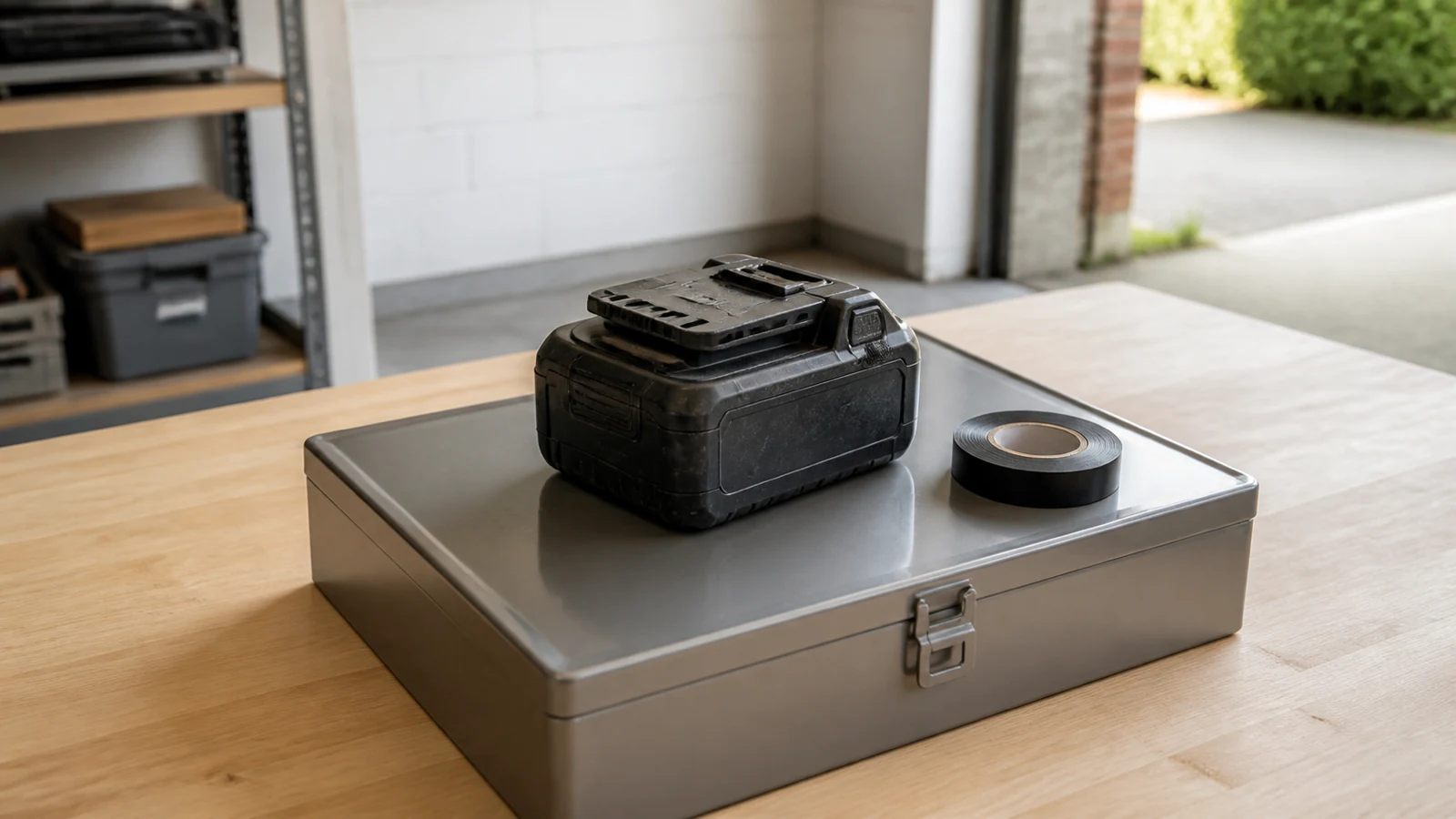
- Protect the terminals. Fire-service guidance commonly recommends taping terminals before recycling to reduce short-circuit risk.
- Use the right disposal route. Contact your local household waste recycling centre, council guidance or a retailer take-back route and say the pack is swollen or damaged.
- Check recalls before replacing. Use the official product alerts channel if you suspect a wider safety issue with a product type or seller.
What signs count as serious?
Swelling is enough on its own. Treat heat that is unusual for the pack, leaking, a cracked casing, strange smell, charger faults after a drop, or a pack that has been wet as stop-use signs. Scottish Fire and Rescue Service advises people to stop using damaged or swollen lithium-ion batteries and dispose of them properly through recycling routes; Mid and West Wales Fire and Rescue Service gives similar advice on stopping use, terminal taping and avoiding household rubbish.
For reader-verifiable safety guidance, see Scottish Fire and Rescue Service lithium-ion battery advice, Mid and West Wales Fire and Rescue lithium battery fire safety guidance and the official GOV.UK product recalls and alerts hub.
When to buy a replacement
Only think about a replacement after the damaged pack is out of service and on its way to the correct disposal route. If your charger or tool also behaved strangely, diagnose that before attaching a new pack; a replacement battery should not be used as a test instrument for a suspected faulty charger.
Next step if the checks point to a replacement
After the unsafe pack is isolated and disposal is arranged, compare the live product details, warranty wording and return terms before choosing any compatible replacement. Check the current POWTREE product detail.